The Two-Account Buffer: A Simple Way to Separate Bills From Everyday Spending
A practical two-account money system that keeps fixed bills separate from groceries, errands, and daily spending so your must-pay money stays easier to protect.
Myth: one bank account keeps money simple.
Reality: one account can make every dollar look available, even when some of that money already belongs to rent, utilities, insurance, subscriptions, loan payments, or next week's phone bill.
That is where the two-account buffer helps.
The idea is simple: use one account for fixed bills and another account for everyday spending. Your bills account protects the money that must stay put. Your spending account handles groceries, gas, takeout, transport, errands, and small flexible purchases.
This is not a complicated budgeting system. It is a separation system. And for many people, separation is easier to follow than constant mental math.

What Is the Two-Account Buffer?
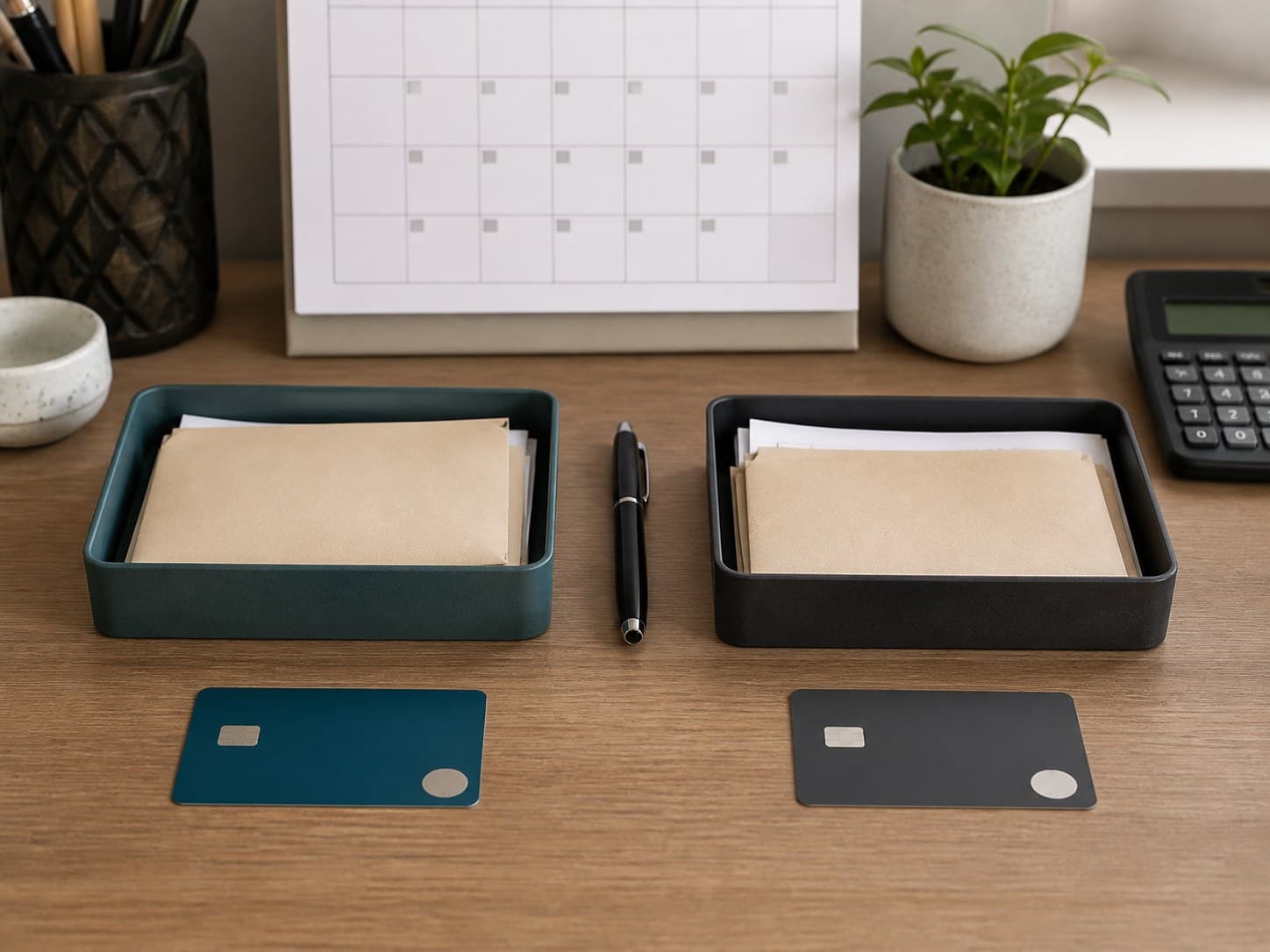
The two-account buffer is a practical money setup where your income is split into two zones:
- A bills account for predictable fixed costs
- A spending account for daily flexible spending
Your bills account is where money waits for things that have to be paid. Rent, mortgage, utilities, phone plan, internet, insurance, minimum debt payments, childcare, subscriptions, and other fixed obligations can live here.
Your spending account is what you use for daily life. Groceries. Coffee. Rideshare. Pharmacy runs. Lunch out. Household items. Weekend plans.
The buffer is the wall between the two.
Instead of looking at one balance and guessing what is safe to spend, you look at your spending account and know that your bill money has already been moved out of reach.
Why This Works Better Than Mental Math
Mental math is fragile when life is busy.
You may know rent is due on the first, but the account balance can still look high on the 24th. A few normal purchases later, the money is lower than expected. Then a bill lands, and the month suddenly feels tighter.
The two-account buffer reduces that pressure because the bills account becomes a holding area.
A concrete example: if rent is $1,850, internet is $65, phone is $45, and insurance is $120, that is $2,080 of money that should not be treated as flexible spending. Moving it to a bills account makes the remaining balance easier to understand.
No perfect spreadsheet needed. Just a cleaner boundary.
The Basic Setup
You can use two checking accounts, one checking and one prepaid debit account, or a bank account plus a spending card. The exact setup depends on your bank, fees, local rules, and what is available to you.
Before opening anything new, check for monthly fees, minimum balance rules, transfer limits, overdraft settings, and whether bill payments can be automated.
Here is the simple structure:
| Account | What It Pays |
|---|---|
| Bills account | Rent, utilities, internet, phone, insurance, subscriptions, minimum debt payments |
| Spending account | Groceries, gas, transport, takeout, pharmacy, errands, small personal purchases |
The bills account should feel slightly boring. That is the point. It is not for impulse purchases, quick transfers, or “just this once” spending.
Step 1: List Your Fixed Bills
Start by writing down every bill that repeats.
Include monthly bills first:
- Rent or mortgage
- Electricity
- Water
- Gas
- Internet
- Phone
- Insurance
- Subscriptions
- Loan minimums
- Childcare
- Gym or membership fees
Then add bills that arrive less often, such as annual renewals, quarterly insurance, vehicle registration, or yearly software subscriptions.
For non-monthly bills, divide the amount by the number of months until it is due. A $240 yearly renewal becomes $20 per month. A $180 bill due every three months becomes $60 per month.
This gives your bills account a more realistic target.
Step 2: Choose a Small Cushion
The buffer works best when the bills account has a cushion.
This does not have to be huge. Even $50 or $100 can prevent small timing problems, especially when an autopay hits one day before payday or a utility bill runs higher than usual.
If money is tight, build the cushion slowly. Add $5 or $10 each payday until the bills account has a little breathing room.
The cushion is not extra spending money. Treat it like a shock absorber.
Step 3: Move Bill Money First
On payday, move bill money before spending begins.
This is the key habit.
If you get paid twice a month, move half of your monthly bill total from each paycheck. If your monthly fixed bills are $2,080, that means moving $1,040 from each twice-monthly paycheck into the bills account.
If you get paid weekly, divide the monthly bill amount by four or use a slightly more precise weekly number. The method does not need to be perfect at first. It needs to be consistent enough to protect the major bills.
Set an automatic transfer if that helps. If your income changes from week to week, use a manual transfer after each payment arrives.
Step 4: Put Autopay in the Right Place
Once the bills account is funded, connect fixed bills to that account.
This is where the system becomes useful. Your rent, utilities, phone, insurance, and subscriptions should pull from the account designed for bills, not from the spending account you use at stores and restaurants.
Move slowly here.
Change one or two autopays first. Watch them process correctly. Then move the rest. Keep a list of what you changed so nothing gets missed.
Also check whether any bill charges a fee for debit card payments, credit card payments, or certain transfer types. A fee-heavy setup can quietly weaken the system.
Step 5: Use the Spending Account for Daily Life
Your spending account becomes the realistic number.
If it says $220, that is the money available for groceries, errands, and flexible choices until the next refill. You do not have to subtract rent in your head. You do not have to remember that the phone bill is coming. That money already moved.
This can make everyday decisions clearer.
You can still spend freely within the account. The difference is that daily spending is no longer competing with the electric bill in the same balance.
What If You Only Have One Bank?
You can still use the idea.
Some banks let you create sub-accounts, savings pockets, vaults, buckets, or spaces. Those can work as long as bill money is visually separated and not mixed with daily spending.
Another option is to keep bills in checking and move flexible spending to a prepaid card or a second no-fee checking account. Just be careful with fees, ATM access, transfer delays, and overdraft rules.
The tool matters less than the boundary.
Common Mistakes to Avoid
The first mistake is moving too little into the bills account. If you forget annual bills, subscriptions, or insurance renewals, the account may look fine until a larger charge appears.
The second mistake is raiding the bills account for daily spending. If that happens often, the system needs adjustment. Either the spending amount is too low, the bill target is too high, or income timing is not being handled clearly.
The third mistake is ignoring transfer delays. Some banks move money instantly inside the same bank but take longer across institutions. If rent is due Friday, do not schedule the transfer late Thursday night and hope.
The fourth mistake is leaving overdraft on without understanding it. Overdraft can turn one timing error into fees. Review your settings before relying on autopay.
A Simple Payday Routine
Use this routine each time income arrives:
- Check the paycheck amount.
- Move the planned bill amount into the bills account.
- Confirm upcoming autopays for the next 7 days.
- Leave the spending account with the amount available for daily life.
- Do not touch the bills account unless a bill amount changes.
This takes about five minutes once the system is built.
If you want to make it even easier, name the accounts clearly inside your banking app. Something like “Bills Only” and “Daily Spending” can help your brain pause before moving money the wrong way.
Who This System Helps Most
The two-account buffer is especially useful if bills and spending currently share the same account, you use autopay, your pay schedule does not line up neatly with due dates, or you feel surprised by bills you technically knew were coming.
It can also help couples, roommates, and shared households because the purpose of each account is easier to explain. One account protects fixed obligations. The other handles daily spending.
This is educational, not personal financial advice. Choose accounts and transfer settings based on your own bank fees, income timing, and household needs.
Final Thought
Money gets easier to read when every balance has a job.
A two-account buffer gives bill money a quiet place to wait and gives daily spending a number you can actually trust. Set the boundary once, then let the system do some of the remembering for you.
Found this useful?
Send it to someone who should read it.