The 10-Minute Evening Reset: A Small Night Routine That Makes Tomorrow Feel Easier
A practical 10-minute evening routine to clear one surface, prepare tomorrow’s essentials, and remove the small frictions that make mornings feel harder.

Myth: an easier tomorrow requires a perfect night routine.
Reality: ten focused minutes can remove the first few obstacles before they have a chance to become morning stress.
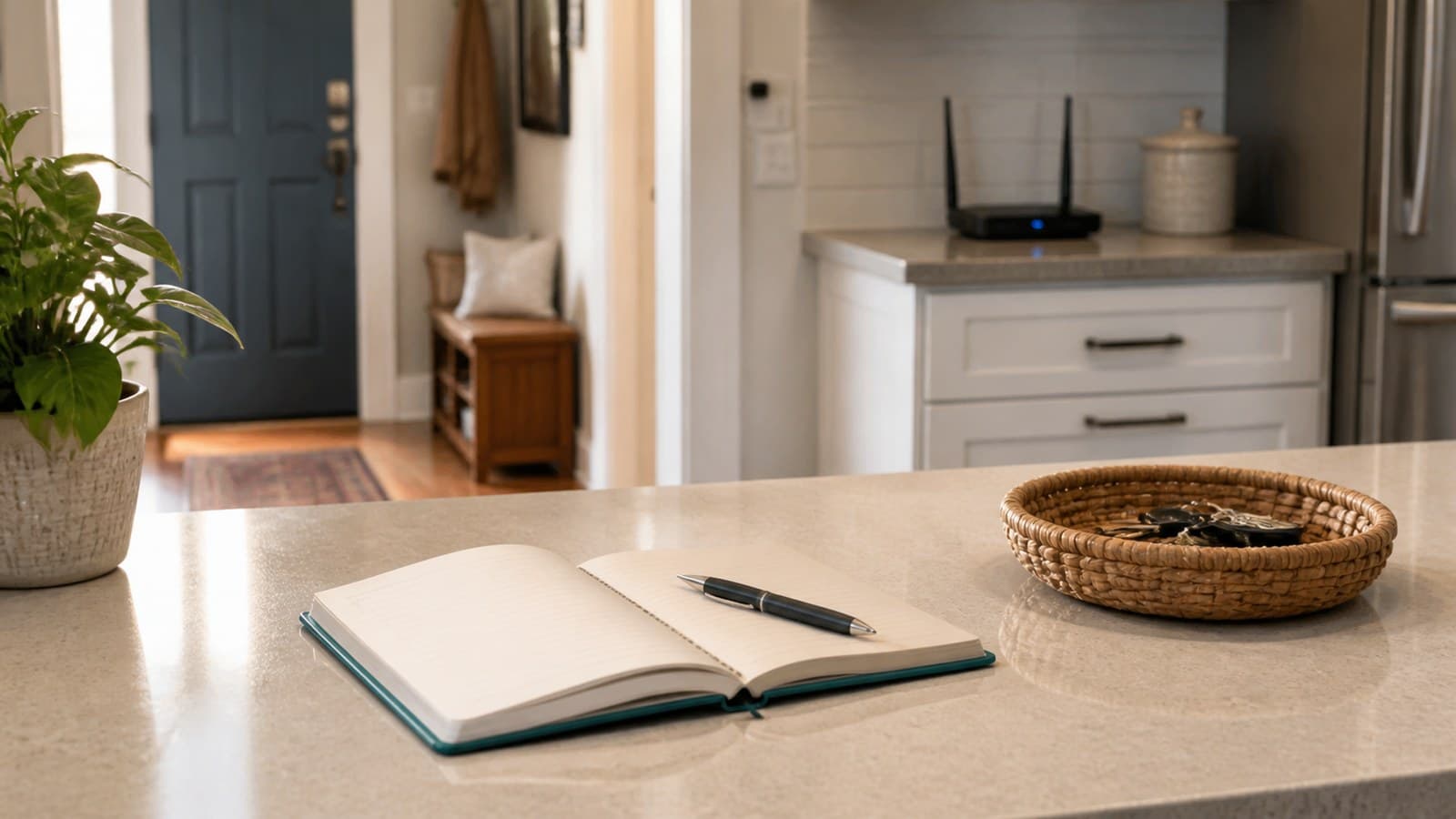
The 10-minute evening reset is not about cleaning your whole home, becoming a hyper-organized person, or planning every hour of tomorrow. It is a small closing ritual. You pick one surface, one launch pad, one first task, and one loose end.
That is enough to make the next morning feel less like a scramble.
What Is the 10-Minute Evening Reset?
The 10-minute evening reset is a short routine you do near the end of the day, usually after dinner or before you start winding down.
It has one job: make tomorrow easier to enter.
Instead of trying to fix your entire life at 9:30 p.m., you remove a few obvious sources of friction. The mug on the counter. The missing keys. The calendar surprise. The task you vaguely know you should start but have not defined yet.
Small things. Real things.
A good evening reset should feel almost too simple. If it turns into a deep clean, a full meal prep session, or a dramatic productivity overhaul, it stops being useful for normal weeknights.
Why Evenings Are Better for Tiny Setup
Morning energy is expensive.
When you wake up and immediately have to find your bag, choose clothes, check the calendar, reply to a forgotten message, and clear yesterday’s mess, your day starts with tiny withdrawals from your patience.
Evenings are different. You may be tired, but you are not yet under tomorrow’s pressure. That makes evening a good time to make low-stakes decisions.
The key is to keep the routine short enough that you will still do it on an ordinary Tuesday.
Set a timer for 10 minutes. When it ends, stop.
Step 1: Clear One Surface
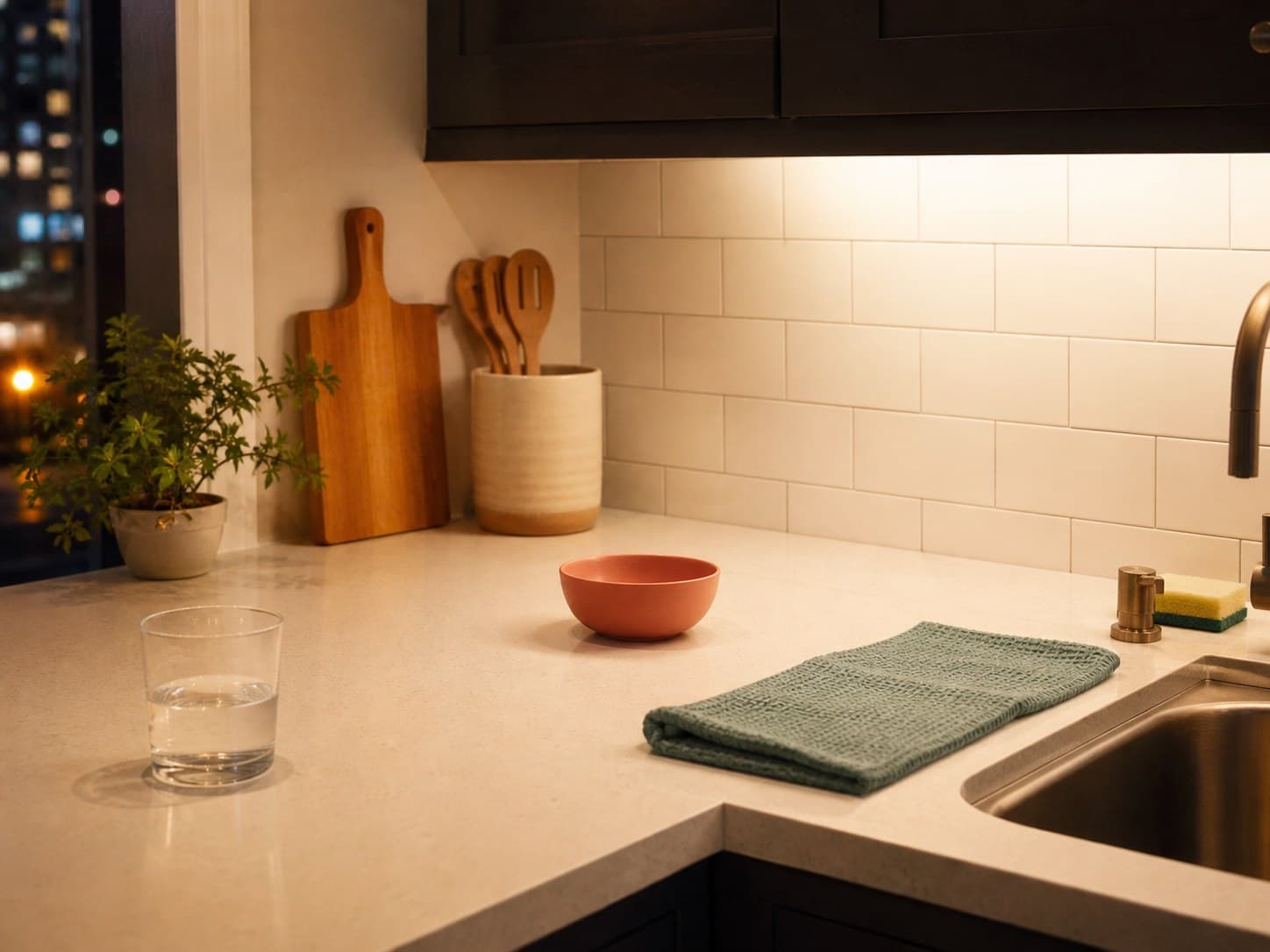
Choose one surface that affects your morning.
For many people, that is the kitchen counter, the dining table, the desk, or the entryway bench. Do not wander through the whole house collecting every misplaced item. That is how a 10-minute reset becomes a 45-minute project.
Pick one surface and make it usable.
Move dishes to the sink or dishwasher. Toss obvious trash. Put stray items into a small basket if you do not have the energy to return everything properly. Wipe crumbs if needed.
The goal is not spotless. The goal is usable.
Step 2: Build Tomorrow’s Launch Pad
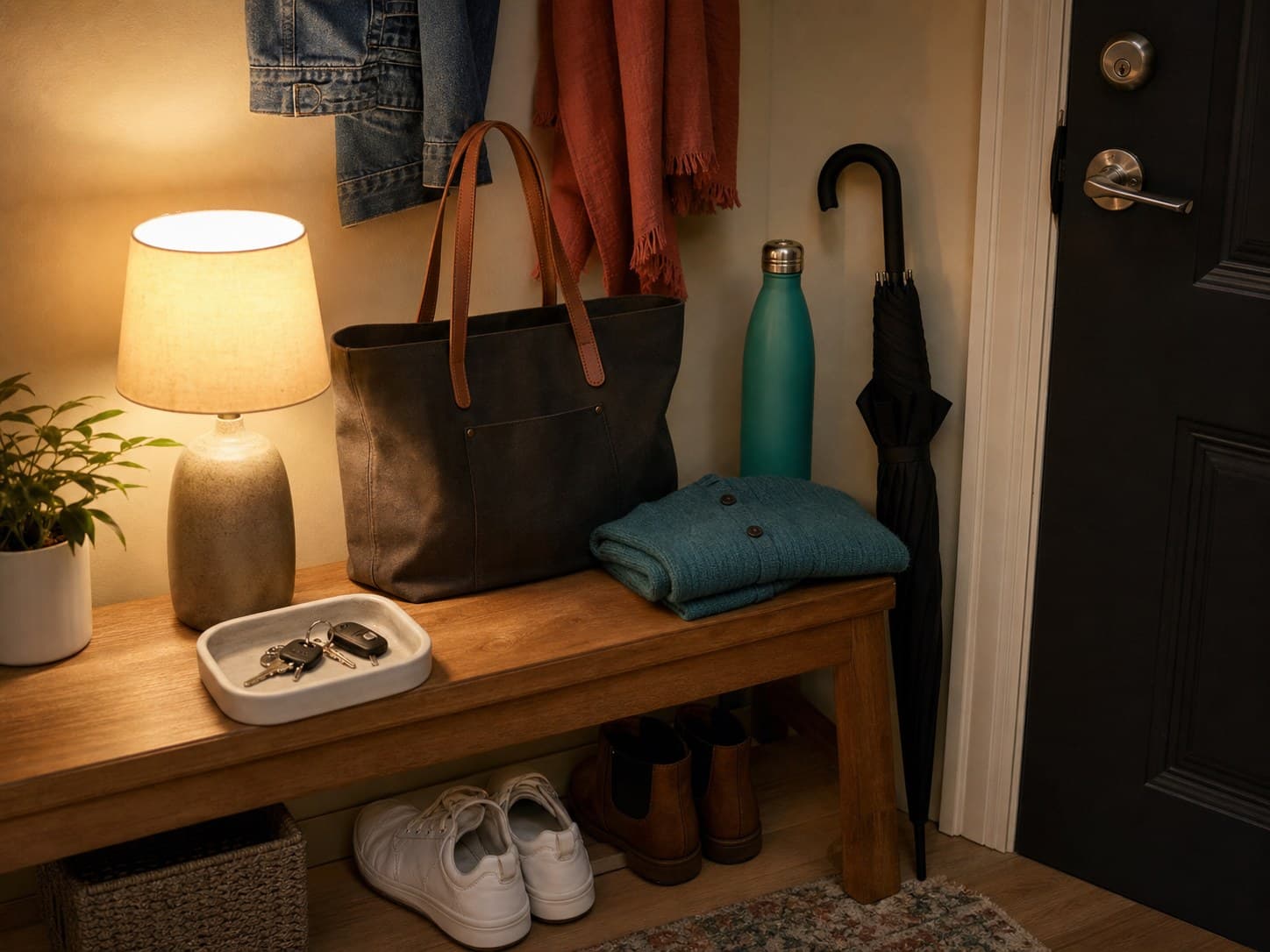
A launch pad is a small spot where tomorrow’s essentials wait for you.
It can be a tray by the door, a chair near your closet, a corner of your desk, or one shelf near the entryway. Use what already exists. No special organizer is required.
Put the things you usually search for in the morning there:
| Item | Evening reset action |
|---|---|
| Keys and wallet | Place them in the same tray or bowl |
| Bag | Put it by the door or desk |
| Water bottle | Refill it or place it near the sink |
| Clothes layer | Set out a jacket, cardigan, or gym item if needed |
| One important paper | Put it where your hand will naturally reach |
A specific example: if you leave at 7:40 a.m., having your keys, tote bag, and water bottle together by 10 p.m. can save five rushed minutes before the day has even started.
That sounds small. It is small. That is why it works.
Step 3: Check Tomorrow’s First Fixed Point
Open your calendar and look for the first fixed thing tomorrow.
It might be a meeting, school drop-off, workout, appointment, call, commute, or deadline. You are not planning the entire day. You are simply finding the first thing that will not move.
Ask two questions:
What time does tomorrow really begin?
What do I need before that moment?
If your first fixed point is a 9:00 a.m. call, you may need your laptop charged and one document open. If your first fixed point is a school run, you may need lunch boxes, shoes, and a signed form. If your first fixed point is a gym class, you may need clothes and headphones.
This step prevents calendar surprises from ambushing your morning.
Step 4: Choose Tomorrow’s First Task
Now choose one first task.
Not five. Not a full to-do list. One.
The task should be specific enough that you can begin without rethinking it. “Work on project” is too vague. “Open the draft and write the intro paragraph” is better. “Clean house” is too big. “Start one load of towels” is better.
Write it somewhere visible: a notebook, sticky note, Notes app, or task app.
A useful format is:
“Tomorrow I start with: [small action].”
This is not meant to control your whole day. It simply gives your brain a clean doorway into the morning.

Step 5: Close One Loose Loop
A loose loop is anything small that keeps tapping your attention.
It might be a text you need to answer, a lunch item you need to move from freezer to fridge, a receipt you need to put in your bag, or a reminder you need to set.
Pick one loose loop and close it.
If it takes under two minutes, do it. If it requires more time, write the next action clearly and leave it for tomorrow.
This is where people often overdo the routine. Resist the urge to solve every open tab in your life. One closed loop is a win.
A Realistic 10-Minute Version
Here is how the routine can look on a normal night.
Minute 1: Start a timer and choose one surface.
Minutes 2 to 4: Clear that surface until it is usable.
Minutes 5 to 6: Put keys, bag, water bottle, and one needed item in your launch pad.
Minutes 7 to 8: Check tomorrow’s first fixed point.
Minute 9: Write tomorrow’s first task.
Minute 10: Close one loose loop or set one reminder.
Then stop.
The stopping point matters because a routine you can finish is easier to repeat.
What to Skip
Skip anything that turns the reset into a performance.
Do not reorganize drawers. Do not redesign your calendar. Do not clean rooms nobody will use tomorrow morning. Do not force yourself to journal if you hate journaling. Do not build a routine that only works when you have unusually high energy.
The best evening reset is almost boring. It quietly gives tomorrow fewer chances to trip you.
Make It Fit Your Life
If you live alone, your reset might be one counter, one bag, one task.
If you live with family or roommates, make the launch pad visible and simple. A shared basket near the door can do more than a complicated system nobody remembers.
If nights are unpredictable, attach the reset to something that already happens: after brushing your teeth, after loading the dishwasher, after turning off the TV, or after plugging in your phone.
If you are exhausted, use the three-minute version: keys in place, water bottle ready, first task written.
That still counts.
Final Thought
A smoother morning often begins with one small decision made the night before. Clear the surface, place the essentials, name the first move, and let tomorrow meet you halfway.
Found this useful?
Send it to someone who should read it.