The 15-Minute Bag Reset: A Simple Way to Stop Carrying Daily Clutter
A quick weekly bag reset for clearing receipts, restocking essentials, finding missing items, and making your everyday tote, backpack, or purse easier to use.
Before you carry the bag again, check five things:
- What should come out?
- What should stay?
- What needs to be refilled?
- What belongs in a smaller pouch?
- What makes the bag heavier than it needs to be?
That is the whole idea behind a 15-minute bag reset.
Your everyday bag can quietly become a moving junk drawer. Receipts stay there for weeks. Loose coins sink to the bottom. A charger disappears under tissues. The lip balm you keep reaching for is somehow in a different pocket every time.
A weekly reset keeps your tote, backpack, purse, work bag, gym bag, or school bag useful instead of annoying.
Why a Bag Reset Helps
A bag reset is not about having a perfect bag. It is about removing the small friction that follows you around.
If your bag is too full, you waste time searching. If it is missing the basics, you end up buying duplicates. If old papers and loose items pile up, the bag feels heavier and less dependable.
The reset works because it is short. Fifteen minutes is enough time to empty, sort, clean, restock, and repack without turning it into a full organizing project.
It also catches tiny problems early. A leaking pen. A dead power bank. A receipt you still need. A snack that should not spend another week in a side pocket. Practical glamour, basically.
Step 1: Empty the Bag Fully
Start by taking everything out.
Do not sort while items are still inside. Bags hide things in corners, inner pockets, laptop sleeves, zipper sections, and tiny pockets you forgot existed.
Put everything on a table, bed, or clean floor. Shake out crumbs over a trash can. If the inside lining is dusty, use a lint roller or a handheld vacuum. A slightly damp cloth works for many washable surfaces, but check the material first.
One specific detail to look for: old receipts from errands that happened more than 7 days ago. If they are not needed for returns, reimbursement, taxes, or warranty records, they can usually leave the bag.
Step 2: Sort Into Three Piles
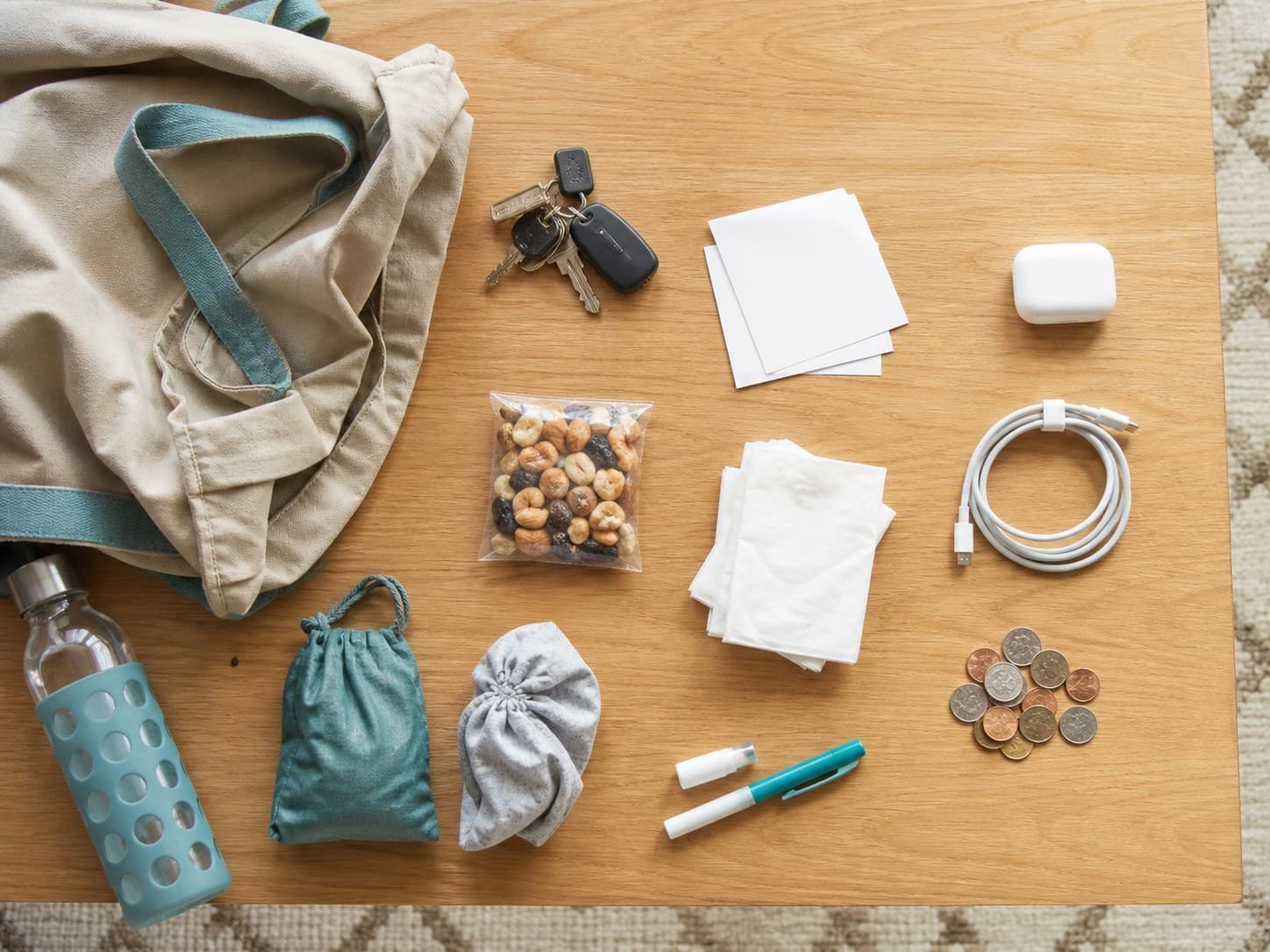
Use three simple piles: keep, remove, and restock.
| Pile | What Goes There |
|---|---|
| Keep | Items you use regularly outside the house |
| Remove | Trash, old receipts, duplicates, random papers, extra weight |
| Restock | Tissues, sanitizer, charger, medication, snacks, cash, or other basics |
The keep pile should be honest. If an item has been riding around for a month without being used, it may not deserve a daily seat.
The remove pile is where the bag gets lighter. Take out duplicate pens, empty wrappers, loose papers, outdated coupons, broken hair ties, and objects that belong in the car, kitchen, bathroom, or desk.
The restock pile is what makes the bag dependable again.
Step 3: Build a Small Essentials Pouch
Loose items create the most mess. A small pouch fixes that fast.
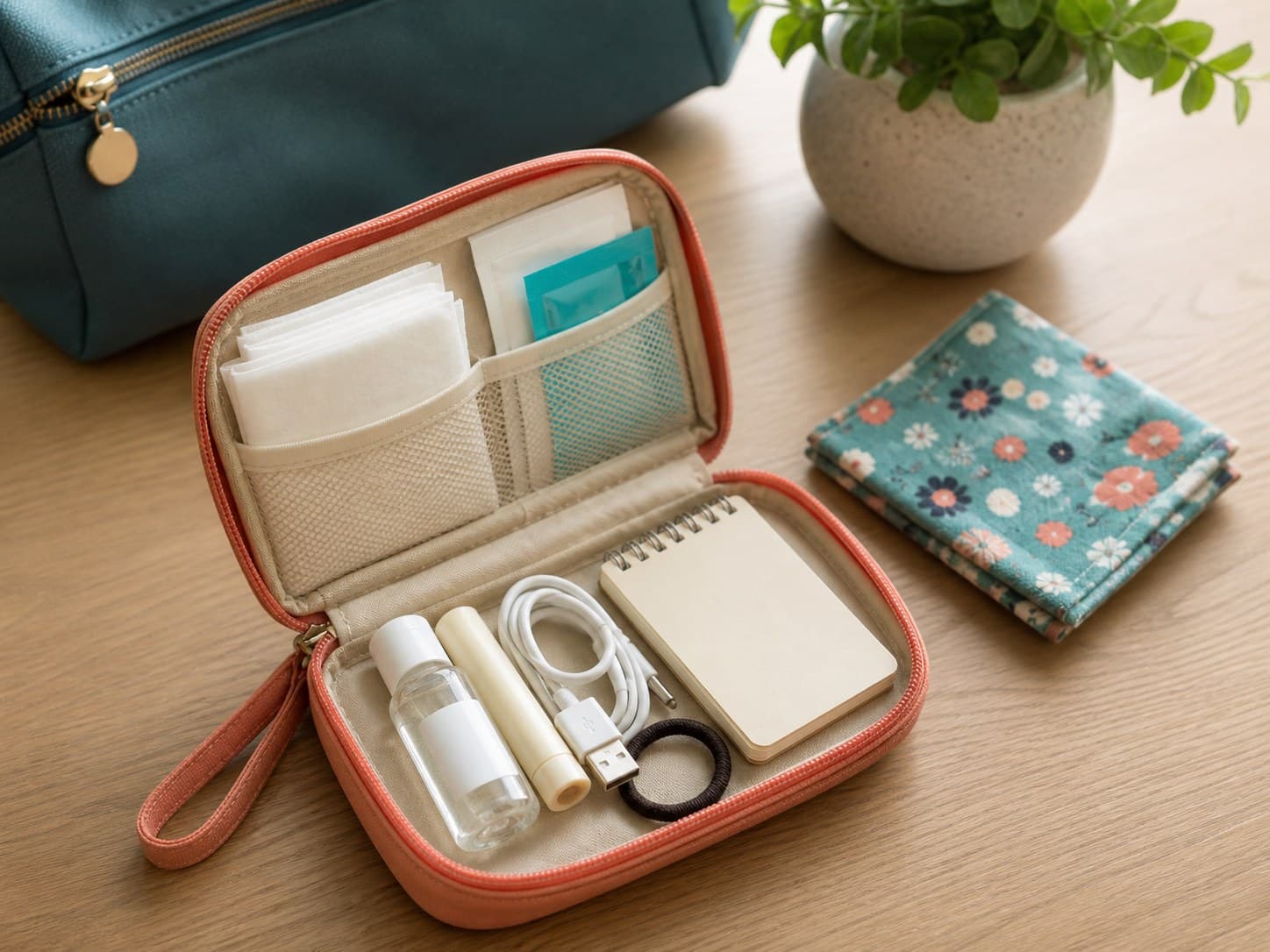
Use one pouch for the tiny things you actually reach for. Depending on your life, that might include:
- Lip balm
- Travel tissues
- Mini hand sanitizer
- Bandages
- Pain reliever or personal medication
- Hair tie
- Charging cable
- Earbuds
- Small notebook
- One pen
Keep the pouch compact. If it becomes too full, it turns into a second bag inside your bag.
A good rule: if you would not want to dig for it while standing in a checkout line, it belongs in the pouch or it does not belong in the bag.
Step 4: Give Important Items a Home
The reset only sticks when each important item has a regular spot.
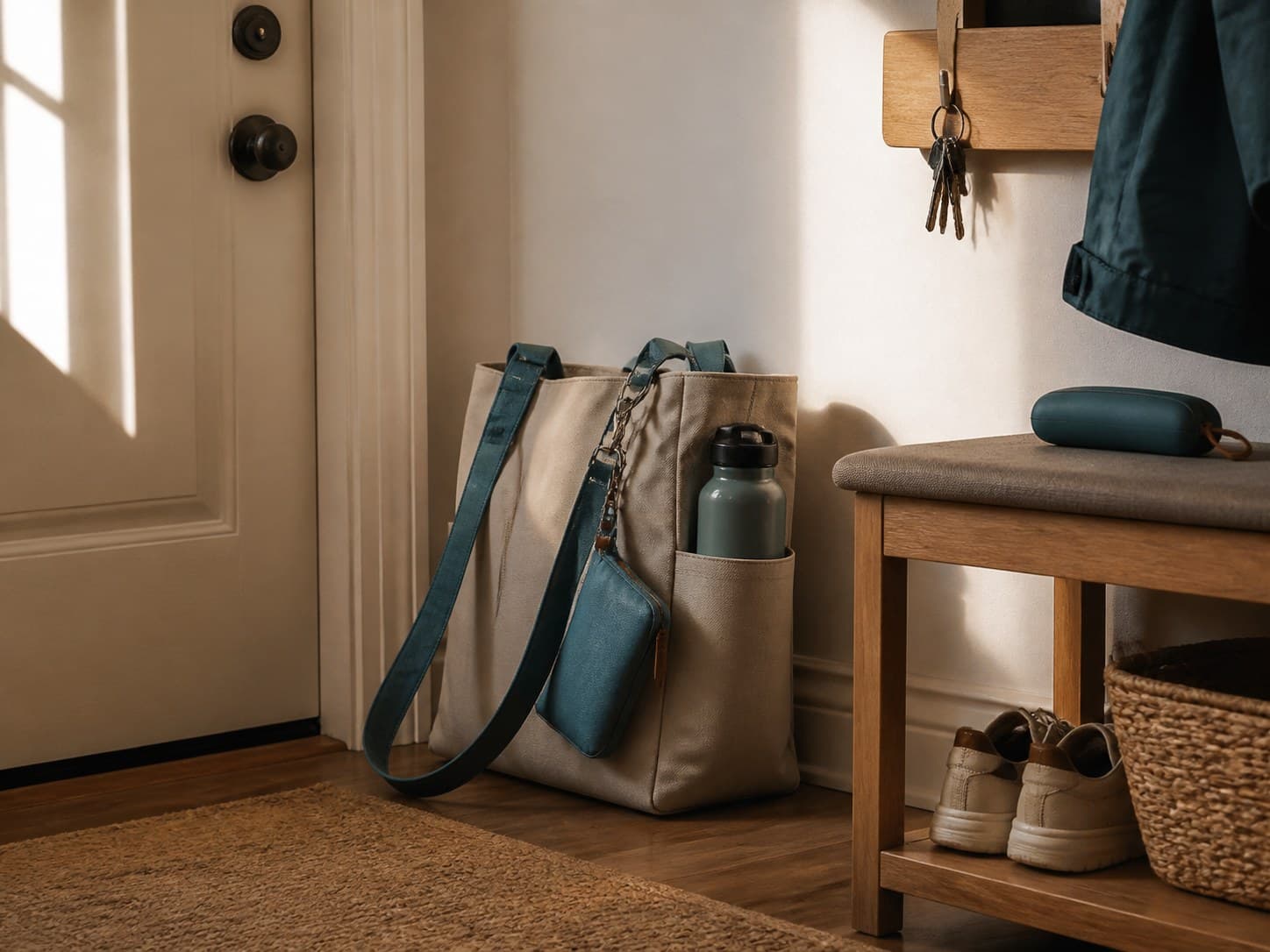
Keys should go in one pocket. Wallet in one section. Charger in the pouch. Water bottle in the same side pocket. Work badge or transit card in the easiest access point.
This sounds small, but it changes the daily experience. You stop patting every pocket before leaving. You stop unpacking half the bag to find one thing.
If your bag has too few pockets, use pouches by category:
- Essentials pouch
- Tech pouch
- Personal care pouch
- Kid or pet pouch
- Work pouch
Do not use every pouch every day. Keep the setup matched to the day you are actually having.
Step 5: Repack for Tomorrow, Not Last Month
When you put items back, think about the next 24 hours.
Are you going to work, class, errands, the gym, or a short outing? Pack for that version of the day.
Remove things that belong to a past version of the week: old meeting papers, extra snacks, receipts, a scarf from a weather change, or the book you keep carrying but never open outside the house.
This is also a good moment to charge small electronics. If you carry earbuds, a power bank, or a card reader for work, check the battery before you need it.
When to Do the Reset
Pick one repeatable time.
Sunday evening works for many people. Friday afternoon works if your bag gets messy during the workweek. If you commute, try doing it right after you get home on your least rushed day.
Set a 15-minute timer. Stop when it ends. A short reset done weekly beats a perfect reset that happens twice a year.
If you switch bags often, keep the essentials pouch as the transferable core. Move the pouch, wallet, keys, and phone. Everything else is optional.
Final Thought
A bag reset gives your day a cleaner launch point.
Start with one full empty-out, one small pouch, and one clear home for keys. Tomorrow’s version of you will feel the difference before leaving the door.
Found this useful?
Send it to someone who should read it.