A Simple Morning Routine That Actually Sticks
A realistic morning routine for busy people who want calmer starts without waking up at 5am or changing their whole life.
Most morning routines fail because they are too big.
People try to wake up very early, exercise for an hour, journal, meditate, cook breakfast, read, and plan the whole day. That sounds nice, but it is hard to repeat when life is busy.
A better morning routine is small, clear, and realistic. It should help you start the day with less stress, not give you another list of things to feel guilty about.
This routine is made for normal people with normal mornings.

Why Simple Morning Routines Work Better
A morning routine does not need to change your whole life in one day.
It only needs to do three things:
- Help you wake up without rushing
- Reduce early distractions
- Give your day one clear direction
When your routine is simple, you are more likely to repeat it. Repetition is what makes it useful.
The goal is not to have a perfect morning. The goal is to have a morning that feels slightly more controlled than yesterday.
1. Start With a Two-Minute Reset
Do not begin your morning by checking notifications.
When you open your phone first, your attention goes straight to other people's messages, updates, problems, and opinions. Before you even stand up, your brain is already busy.
Start with a two-minute reset instead.
What to do:
- Sit up before picking up your phone
- Drink a glass of water
- Open a curtain or turn on a light
- Take 3 slow breaths
- Ask yourself what kind of start you want today
This sounds small because it is small. That is the point.
A small reset gives your brain a clean start before the day gets loud.
2. Keep Your Phone Away for the First 10 Minutes
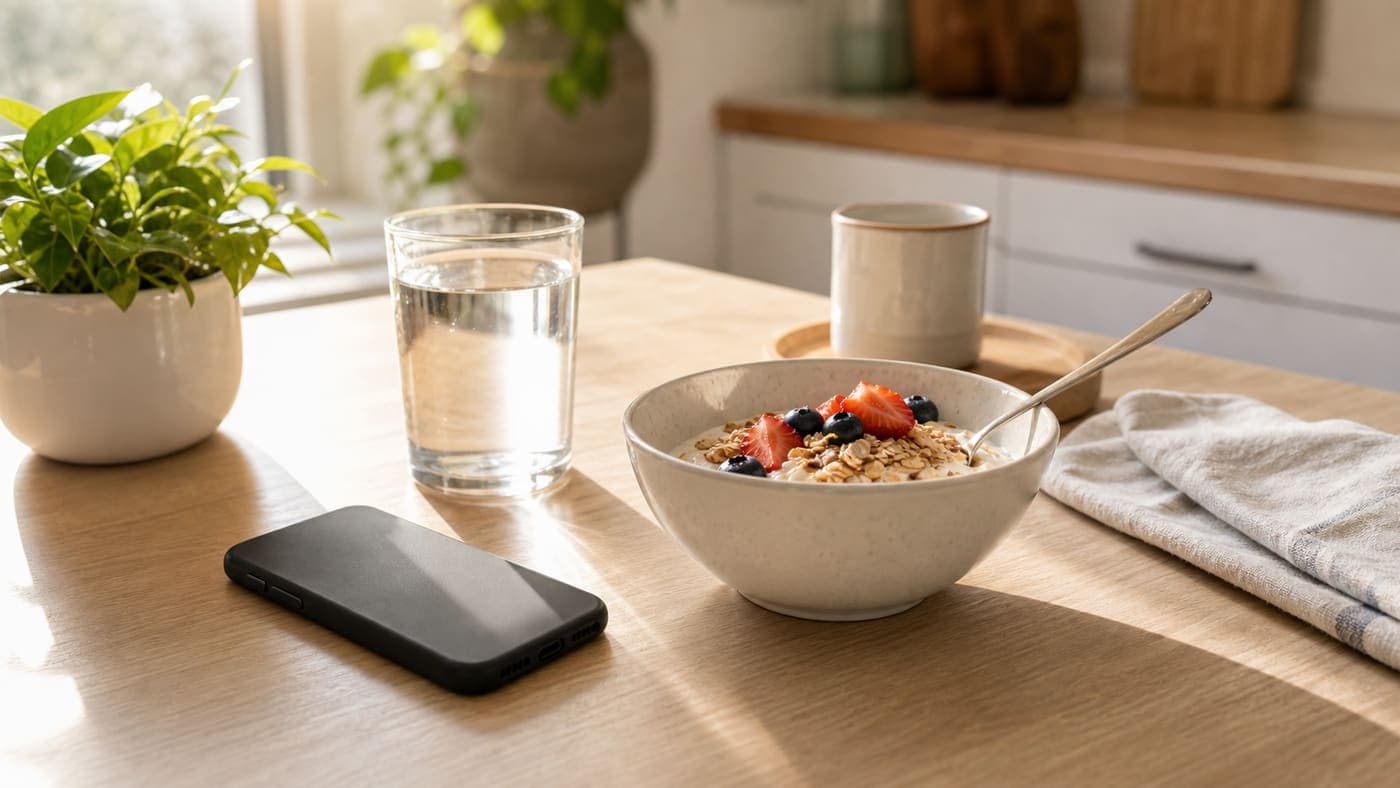
Your phone is useful, but it can also steal the first quiet part of your day.
If you check social apps, email, news, or random videos immediately, your mind starts jumping between topics. That makes the morning feel faster and more stressful.
Try a simple 10-minute phone rule.
What to do:
- Keep your phone face down
- Do not open social apps right away
- Check only urgent calls or messages
- Avoid scrolling before breakfast
- Put the phone across the room if needed
You do not have to avoid your phone for hours. Just protect the first 10 minutes.
That short gap helps you feel like you are starting the day on purpose.
3. Move Your Body for 5 Minutes
You do not need a full workout in the morning.
A few minutes of movement can wake up your body, reduce stiffness, and make you feel more alert. This is especially helpful if you sit for long hours during the day.
Try this simple movement routine:
- Roll your shoulders for 30 seconds
- Stretch your neck gently
- Reach your arms overhead
- Bend forward slowly and relax your back
- Walk around the room for 1 minute
Keep it easy. Do not turn it into a fitness test.
The goal is to tell your body that the day has started.

4. Choose One Main Task for the Day
Many mornings become stressful because everything feels important.
Instead of thinking about your full to-do list, choose one main task.
Ask yourself:
- What task would make today feel successful?
- What should I finish before distractions begin?
- What can wait until later?
Your answer should be short.
Example:
Today, I will finish the payment report before lunch.
Another example:
Today, I will clean my inbox for 20 minutes and reply to important messages.
One clear task gives your day direction. You can still do other things, but this one task becomes your anchor.
5. Eat or Drink Something Simple
You do not need a perfect breakfast.
But running on nothing can make you feel tired, irritated, or distracted earlier in the day. Keep it simple enough that you can repeat it.
Easy options:
- Water and a banana
- Tea and toast
- Yogurt and fruit
- Eggs and bread
- Oats or a small bowl of cereal
The point is not to create a perfect meal. The point is to avoid starting the day completely empty if that makes you feel worse.
Pick one simple option that fits your life.
6. Prepare One Thing the Night Before
The easiest morning routine starts the night before.
Morning stress often comes from tiny decisions: what to wear, where the keys are, what to do first, whether the phone is charged, or what needs to be packed.
Remove one decision before sleeping.
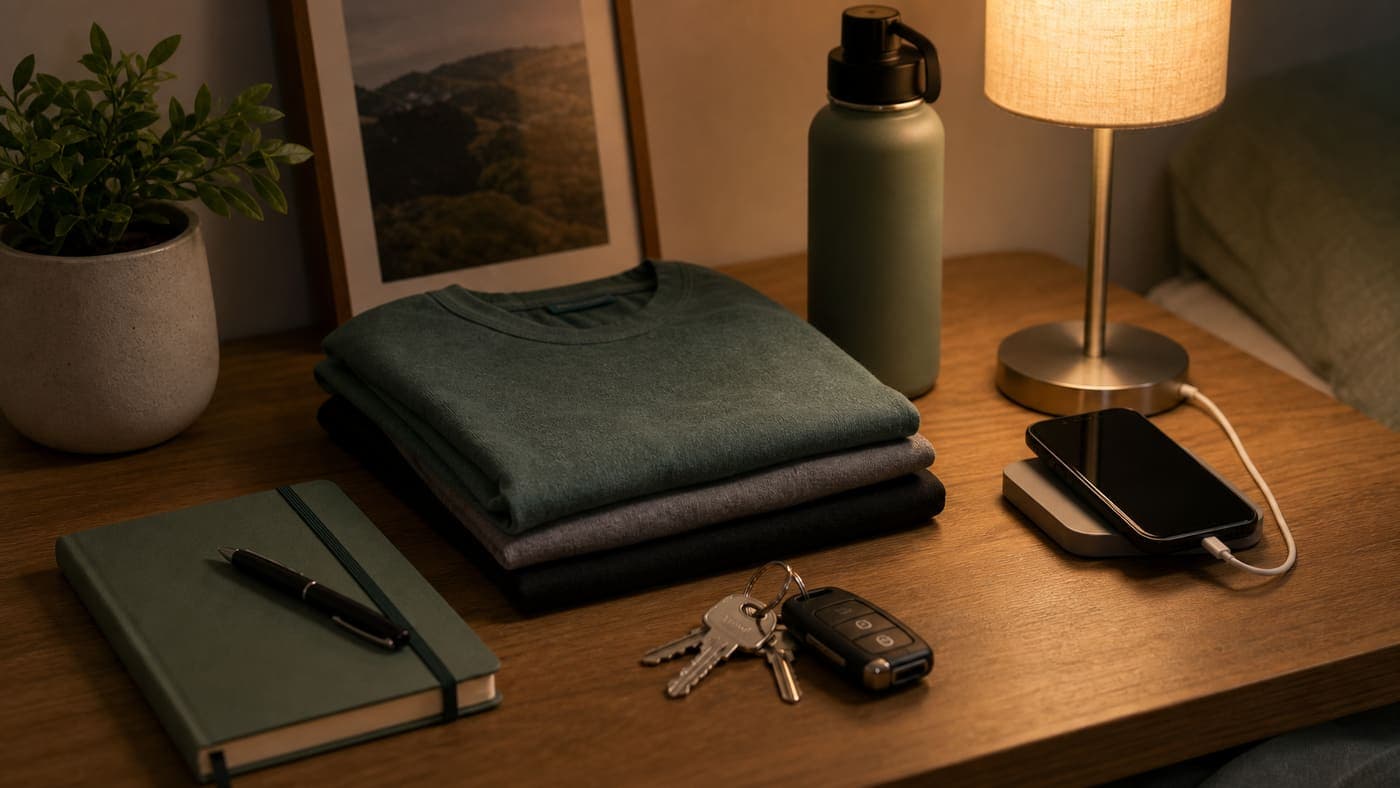
What to prepare:
- Choose tomorrow's clothes
- Put your keys and wallet in one place
- Fill a water bottle
- Write tomorrow's first task
- Keep your charger away from the bed
Do not prepare everything. Just prepare one thing.
One prepared item can make the morning feel smoother.
7. Make the Routine Easy to Repeat
A routine only works if you can repeat it on boring, busy, normal days.
Do not build a routine for your best mood. Build it for your average morning.
A good routine should be:
- Short
- Clear
- Flexible
- Easy to restart
- Useful even if you only do half of it
If you miss a day, do not restart everything. Just come back the next morning.
Consistency is not doing it perfectly. Consistency is returning without drama.
The 15-Minute Version
| Step | What to do | Time |
|---|---|---|
| Reset | Water, light, 3 breaths | 2 minutes |
| No scrolling | Keep phone away | 10 minutes |
| Move | Gentle stretch | 5 minutes |
| Focus | Pick one main task | 2 minutes |
| Prepare | Set one thing for tomorrow | 5 minutes |
You do not need to do all of it at once. Start with the first two steps.
Common Mistakes to Avoid
Do not make the routine too long.
If your morning routine needs 90 minutes, it will probably break as soon as your schedule changes.
Do not copy someone else's routine exactly.
Your life, work, family, sleep, and energy are different. Use ideas, but shape them for your own day.
Do not depend on motivation.
Make the routine so small that you can do it even when you do not feel motivated.
Do not quit because one morning goes badly.
A bad morning does not mean the routine failed. It just means you are human.
Quick Recap
| Habit | Why it helps | Time needed |
|---|---|---|
| Drink water first | Helps you wake up gently | 2 minutes |
| Keep phone away | Reduces early distraction | 10 minutes |
| Stretch lightly | Loosens body and mind | 5 minutes |
| Pick one task | Makes the day clearer | 2 minutes |
| Eat something simple | Supports energy | 5 minutes |
| Prepare at night | Removes morning stress | 5 minutes |
A better morning does not need to be dramatic. Start with water, light, less scrolling, and one clear task. Small mornings done consistently can change the way your whole day feels.
Found this useful?
Send it to someone who should read it.