How to Build a Personal Uniform That Still Feels Like You
A practical guide to creating a repeatable outfit formula that saves time, reduces closet stress, and still leaves room for personality.
Myth: a personal uniform means wearing the exact same outfit every day.
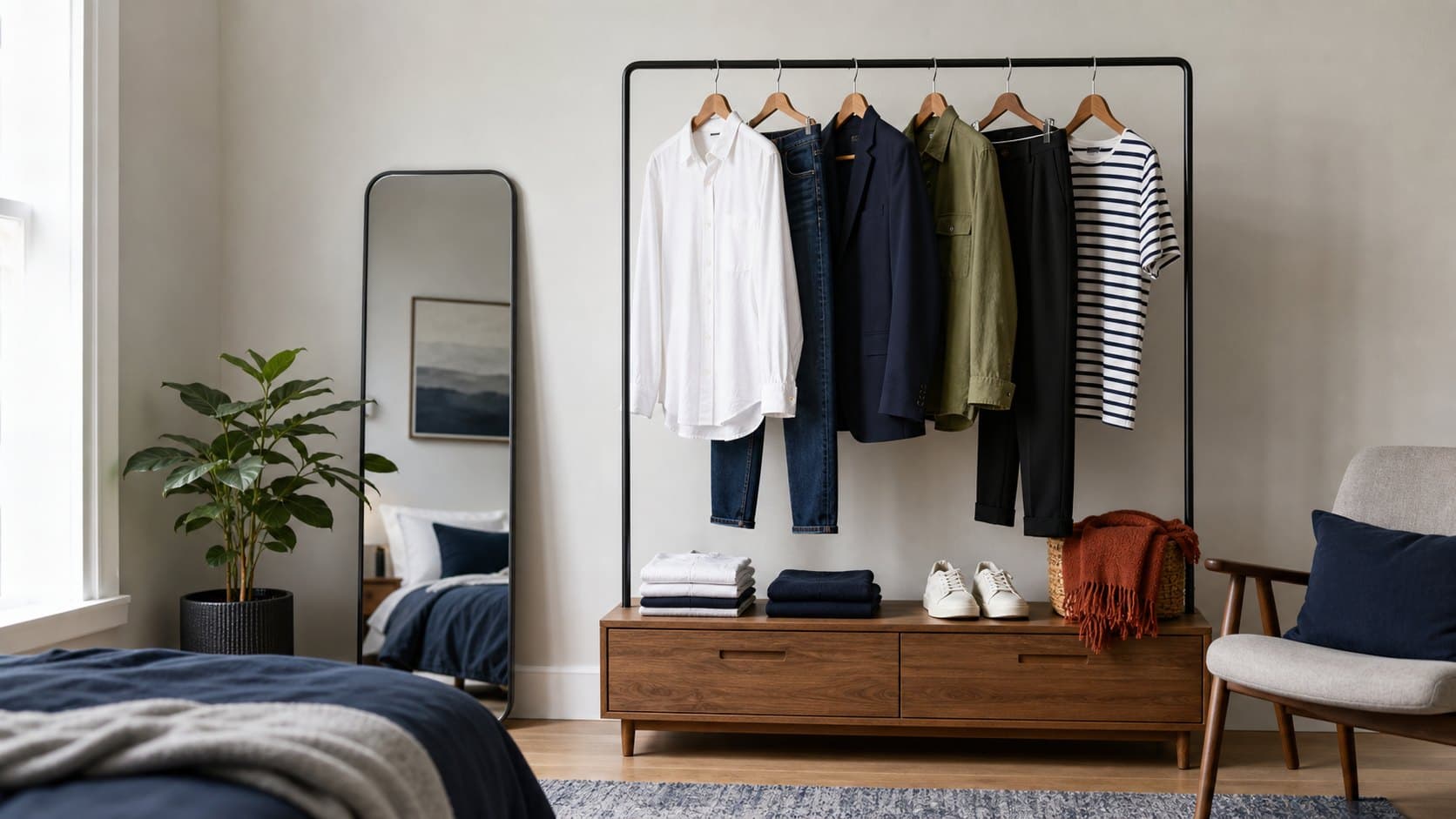
Reality: a good personal uniform is more like a shortcut. It gives you a repeatable outfit formula so getting dressed takes less energy, but it still leaves room for weather, mood, work, errands, and personality.
Think of it as your default setting.
Instead of standing in front of a full closet at 8:17 a.m. trying on three shirts and rejecting all of them, you already know the shape that works: relaxed trousers, a clean top, one layer, comfortable shoes, and one detail that makes it feel like you. That small bit of structure can make your mornings smoother and your closet easier to use.
What Is a Personal Uniform?
A personal uniform is a small set of outfit formulas you repeat because they fit your real life.
It is not a costume. It is not a rule that says you can only wear black, white, and denim. It is simply a pattern you trust.
For example:
- Button-down shirt + straight jeans + loafers
- Knit top + wide-leg trousers + clean sneakers
- T-shirt + overshirt + dark denim
- Simple dress + jacket + comfortable flats
- Polo or tee + chinos + lightweight layer
The exact pieces depend on your style, climate, work, and body. The useful part is the formula. Once the formula is clear, you stop rebuilding an outfit from scratch every morning.
Why Getting Dressed Feels Harder Than It Should
Closets often create stress because they hold too many unrelated decisions.
You may have clothes for a past job, clothes that almost fit, clothes that require the right mood, clothes bought for one event, and clothes that look good in theory but never survive a real Tuesday.
That creates visual noise.
A personal uniform quiets the decision. You are not asking, “Who should I be today?” before breakfast. You are asking, “Which version of my trusted formula fits today?”
That is easier to answer.
Start With Your Real Week
Before buying anything, look at your actual calendar.
Not the ideal version of your life. The real one.
If your week includes office hours, school pickup, grocery runs, remote work, dinner with friends, and one lazy Sunday, your wardrobe should support those moments first. A closet full of special-occasion pieces will not help much if your main problem is getting dressed for ordinary weekdays.
Write down your three most common outfit situations.
For many adults, they look like this:
| Life Situation | Useful Uniform Formula |
|---|---|
| Work or meetings | Clean top + structured layer + dark pants |
| Errands and casual days | T-shirt or knit + jeans + sneakers |
| Dinner or social plans | Favorite base outfit + sharper shoes + one accessory |
| Home or remote work | Comfortable pants + neat top + easy layer |
| Travel day | Soft layers + reliable shoes + crossbody or tote |
Choose the rows that match your life. Ignore the rest.
Pick Three Anchor Pieces
Your uniform needs anchors. These are the pieces that do the most work in your closet.
Good anchors are easy to pair, comfortable enough to repeat, and sturdy enough to wear often. They do not have to be expensive. They just have to earn their space.
Examples of anchor pieces:
- A pair of dark jeans that works with almost every top
- A white or light blue shirt
- A black, navy, or charcoal trouser
- A soft knit top
- A lightweight jacket
- Clean sneakers
- Loafers, flats, boots, or sandals you can walk in
- A simple dress that changes with layers
Here is a practical test: if you packed for a 4-day trip using only one carry-on, which pieces would you reach for first? Those are probably your anchors.
Build One Formula Before Building a Whole Wardrobe
Trying to redesign your entire style at once usually creates more confusion.
Start with one formula.
For example:
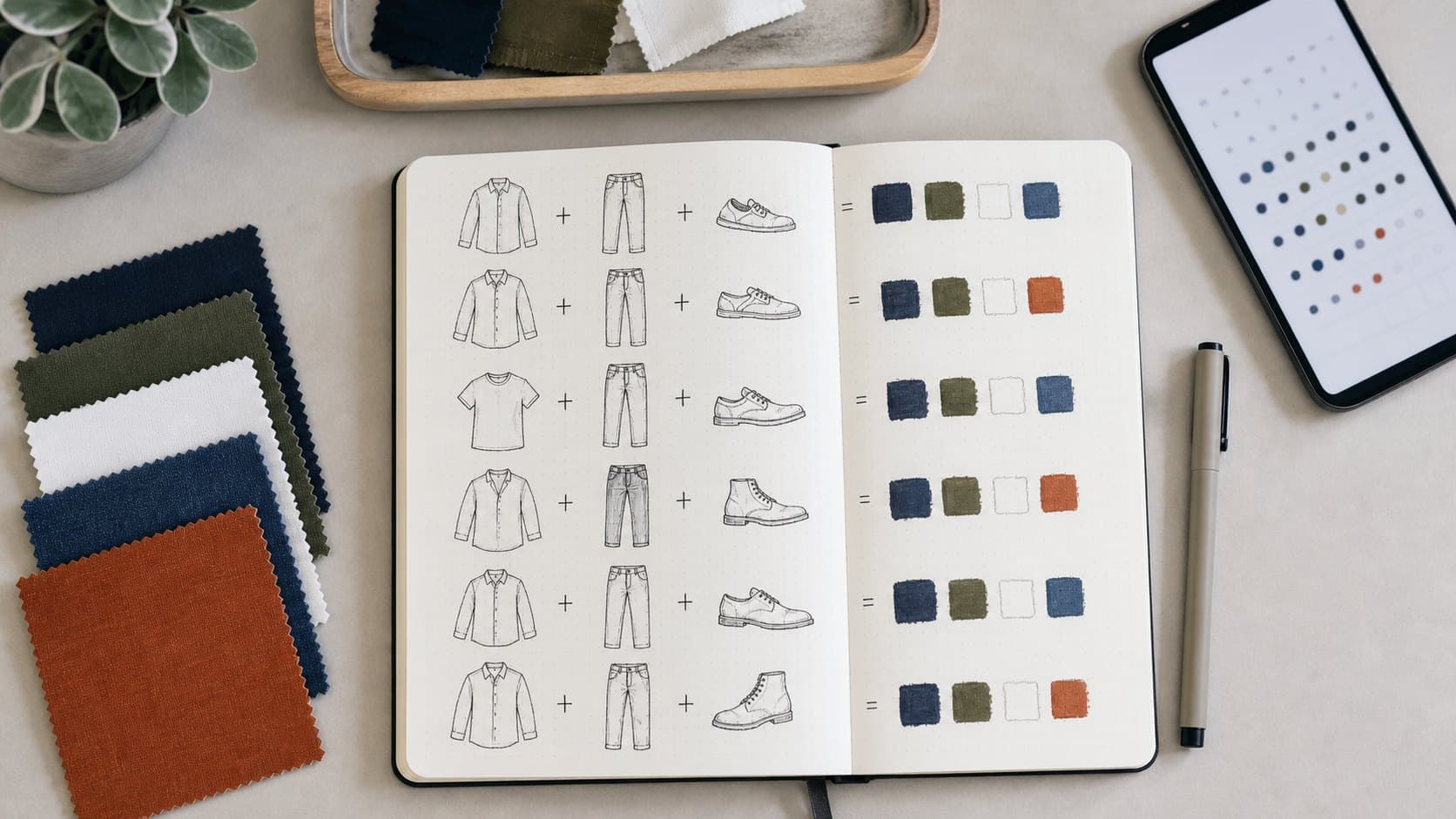
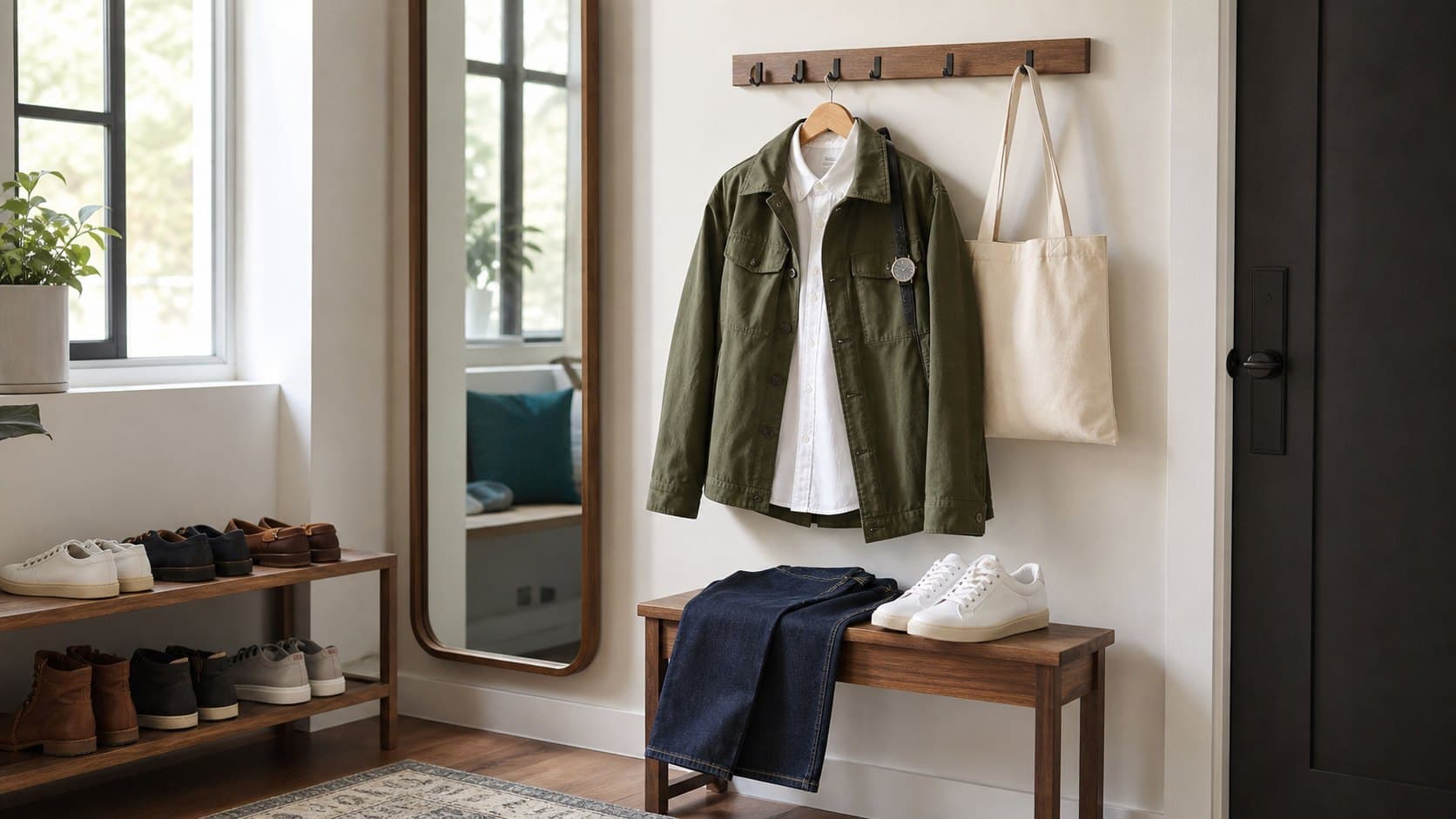
Dark jeans + white shirt + olive jacket + clean sneakers.
Wear it once. Notice what works. Is the shirt too stiff? Are the sneakers actually comfortable? Does the jacket make the outfit feel finished? Did you feel like yourself, or did it feel borrowed from someone else’s Pinterest board?
Adjust from there.
Maybe your version is:
Dark jeans + striped tee + navy blazer + loafers.
Or:
Black trousers + soft knit + denim jacket + flats.
The goal is not to find the “correct” outfit. The goal is to find a reliable base that can survive your real day.
Use Color to Make Repeating Easier
A personal uniform works best when the colors cooperate.
You do not have to wear only neutrals. But you do need enough overlap that pieces can mix without drama.
Try this simple color structure:
- Two base colors: navy, black, charcoal, denim, cream, white, brown, or gray
- One support color: olive, burgundy, camel, soft blue, rust, forest green, or blush
- One accent color: a scarf, bag, shoe, belt, nail color, watch strap, or cap
This keeps the closet flexible. It also gives your outfits a recognizable feel without making every day look identical.
A small accent can do more than another loud statement piece. One rust scarf, teal bag, red flat, silver watch, or patterned sock can make a repeat outfit feel intentional.
Make Versions, Not More Decisions
Once you find a formula, create versions of it.
A formula is the structure. A version is the daily variation.
Example formula:
Clean top + relaxed pants + light layer + comfortable shoe.
Possible versions:
- White shirt + dark jeans + olive jacket + sneakers
- Striped tee + black trousers + denim jacket + loafers
- Navy knit + wide-leg jeans + tan jacket + flats
- Plain tee + chinos + cardigan + slip-on shoes
Same structure. Different feeling.
This is where the personal uniform becomes useful. You get the comfort of repetition without looking like you are wearing the same outfit every day.
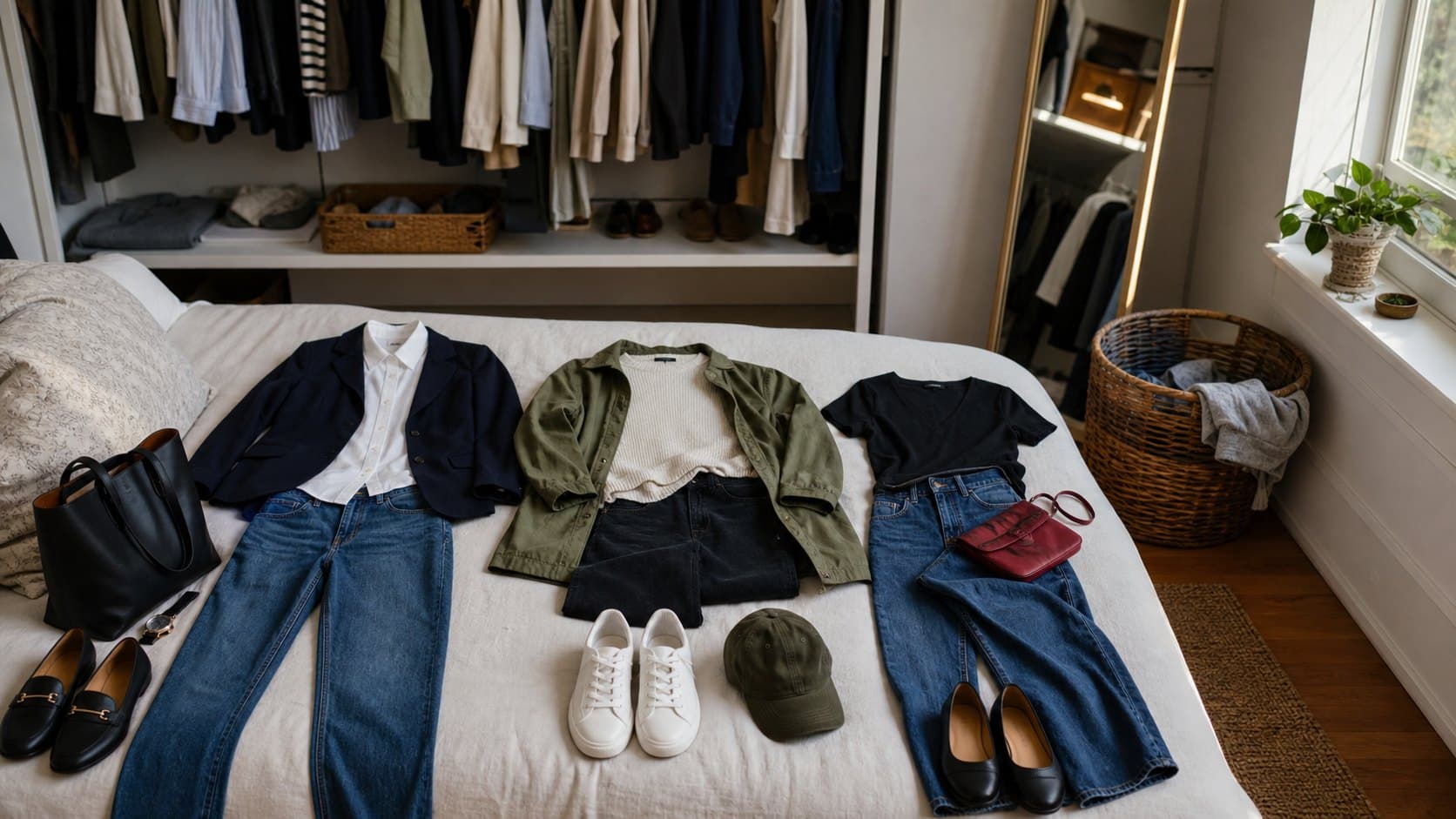
Keep a “No Thinking” Outfit Ready
Everyone needs one outfit that works when the day starts badly.
You overslept. The laundry is half-done. The weather changed. You have 11 minutes before leaving. This is not the moment to discover your new aesthetic.
Build one no-thinking outfit and keep the pieces easy to find.
It should be:
- Comfortable
- Clean-looking
- Weather-appropriate for most days
- Easy to wash
- Good enough for errands, casual work, or a quick meetup
- Built from pieces you already trust
For many people, this might be dark denim, a plain top, a lightweight jacket, and sneakers. For someone else, it might be a knit dress and boots. The specific outfit matters less than the fact that it is ready.
A real detail helps here: take a quick mirror photo of the outfit when it works. Save it in a phone album called “Outfits.” On a rushed morning, that album is faster than memory.
Edit Your Closet Around the Formula
After you have a few working formulas, your closet becomes easier to edit.
You can ask sharper questions:
- Does this piece work with at least two of my formulas?
- Is it comfortable enough for a normal weekday?
- Do I avoid it because of fit, fabric, color, or care?
- Does it need a very specific mood to work?
- Would I pack it for a short trip?
This removes the emotional fog from decluttering. You are not judging whether an item is “good.” You are checking whether it supports the way you actually get dressed.
Some pieces can stay for events, hobbies, or sentimental reasons. They just should not crowd the daily section of your closet.
Leave Room for Personality
The risk of any uniform system is making it too plain.
Avoid that by choosing one signature detail.
It could be:
- A watch you wear every day
- Bright socks
- A red bag
- A denim jacket
- A silver necklace
- A patterned scarf
- A favorite cap
- A specific shoe style
- Rolled sleeves
- A bold lip color
This detail keeps the outfit from feeling anonymous. It tells the world, and yourself, that the repeatable part is intentional.
Personal style often lives in small choices. The cuff. The shoe. The color. The way a jacket is layered. A uniform gives those details more room to show because the rest of the outfit is not fighting for attention.
Try the 7-Day Uniform Test
Use one week as an experiment.
Pick one formula and wear a version of it for seven days. Change the pieces as needed, but keep the structure similar.
At the end of each day, rate the outfit quickly:
- Did it fit the day?
- Did I feel comfortable?
- Did I feel like myself?
- Was anything annoying?
- Would I wear this again?
This takes less than one minute. You can write notes in Apple Notes, Google Keep, Notion, or a paper notebook. Keep it simple.
By the end of the week, you will know more than you would from scrolling outfit ideas for an hour.
What to Avoid
Do not buy five new pieces before testing what already works.
Do not copy someone else’s uniform exactly. Their job, climate, body, and daily errands may be completely different from yours.
Do not make the formula so strict that it becomes boring after three days.
Do not keep uncomfortable “almost right” clothes in your main daily section. If the waistband pinches, the collar annoys you, or the fabric needs constant adjusting, it will lose every time you are tired.
Do not confuse simple with careless. A personal uniform can look polished because the pieces fit, coordinate, and repeat with purpose.
The Simple Starting Plan
Start here:
- Write down your three most common weekly situations.
- Choose one outfit formula for each.
- Pick three anchor pieces you already own.
- Create one no-thinking outfit.
- Wear one formula for seven days.
- Keep notes on what feels good, useful, and realistic.
- Edit your closet based on what you actually wear.
A personal uniform is not about shrinking your style. It is about removing the daily guesswork so your clothes can do their job.
When your closet has a clear rhythm, getting dressed becomes less of a debate and more of a clean first decision for the day.
Found this useful?
Send it to someone who should read it.